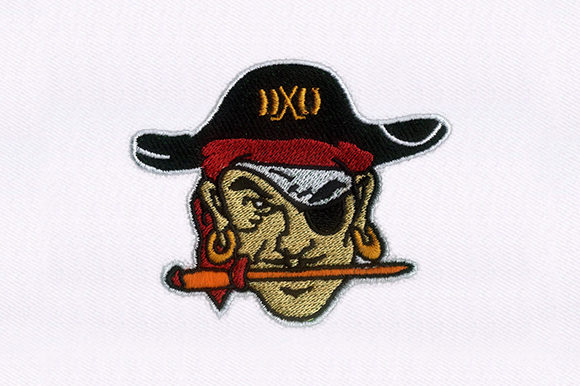
Red Tricorne Pirate Embroidery for Small Business Merchandise
As an embroidery designer specializing in branded merchandise for small businesses, I’m always evaluating designs for their commercial potential beyond mere decoration. The Red Tricorne Pirate embroidery file presents a unique opportunity for many creative enterprises. This review will focus on its practical application for patches, uniforms, and branded products from a professional standpoint.
First Impression: A Bold and Playful Brand Accent
The Red Tricorne Pirate design immediately conveys a sense of bold character. The imagery suggests adventure, independence, and a touch of classic whimsy. For a business, this isn’t just a decorative motif; it’s a potential brand personality amplifier. It feels more playful and rustic than strictly corporate, which can be a huge advantage for businesses wanting to connect with customers on a more human, story-driven level.
A boutique with a nautical theme, a coffee shop named “The Black Spot,” or a handmade toy company could leverage this visual to create immediate recognition. The “high-quality” and “detailed” description hints at a design that should translate well into a tangible, premium-looking embroidered patch or logo accent, which is essential for building customer trust and perceived product value.
Performance in Real Business Scenarios
Let’s walk through concrete applications where the Red Tricorne Pirate machine embroidery design could enhance your small business merch.
Embroidered Patches for Product Labels and Gifts
This is one of the strongest uses. A well-executed patch can serve as a product label for a handmade shop, a collector’s item for an Etsy store, or a customer loyalty gift. Stitched onto a tote bag, apron, or even as a standalone pin, it becomes a portable piece of your brand story. For a pirate-themed event or a local bakery with a quirky personality, these patches could be central to the brand identity.
Uniform and Apparel Branding
For staff custom apparel, consider this design as a sleeve detail or a chest logo accent rather than a primary, large-front logo. On a work shirt or apron embroidery, it adds character without overwhelming the garment. For cap embroidery, its central focal point could work well, but sizing is critical, as discussed below.
Tote Bags, Aprons, and Boutique Merchandise
The design’s detailed nature suggests it would look excellent as a featured mark on a canvas tote or a chef’s apron. These items often sell as secondary handmade product offerings and help with visual consistency across your branded touchpoints. A florist or creative studio using this on their carrier bags would create a memorable, engaging customer experience.
Critical Considerations for Commercial Use
Professional commercial embroidery requires careful planning to ensure the finished product looks impeccable and lasts.
Navigating Scale and Placement
The Red Tricorne Pirate must be evaluated at different scales. Before production, test it at a small patch size. Detailed elements like the tricorne hat and likely facial features may require simplification or a higher stitch density to remain clear when small. For cap embroidery on curved fronts, the design’s shape must be compatible with the cap’s crown curve.
Fabric and Durability Factors
This design will be stitched on various fabric textures. Test on the actual material you’ll use—denim for tote bags, poly-cotton for uniforms, or canvas for patches. Always use the proper stabilizer to prevent puckering, especially on lighter fabrics. For items needing frequent washing, like uniforms, ensure the thread colors are vibrant and locked in with dense stitching to resist fading.
Color Contrast and Visual Clarity
The “Red” in the title is a key brand color. Review the thread color contrast against your background fabrics. On dark uniforms, the red and other colors must be bright enough to stand out. Consider creating a printable mockup for client approval to visualize this contrast before committing to thread.
Enhancing Brand Identity and Professionalism
Integrating the Red Tricorne Pirate into your merchandise isn’t just about adding a picture; it’s about strategic branding.
A consistent, well-embroidered application signals professionalism and attention to detail. It elevates a simple tote bag from a commodity to a branded design asset. For a handmade presentation, a beautiful patch can be the signature that proves care and craft. This directly influences buyer engagement, making products more desirable and memorable.
However, the thematic nature means it should align with your overall brand narrative. A pet brand might use it for a pirate-themed product line, while a café might use it for a special “Adventure Blend” promotion. Ensure it complements your other design assets.
Practical Designer Notes Before You Hoop
Before running this digital embroidery file for business, follow these steps.
- Test in Single Color First: Run a test, even in black and white, to check the outline integrity and stitch density without the distraction of color.
- Confirm the Technical Specs: The product description doesn’t specify exact hoop size, stitch count, or file formats. You must check these details from the file provider to ensure compatibility with your machines and projects.
- Create a Physical Sample: Stitch it on a scrap of your intended fabric. Inspect spacing, thread coverage, and any potential issues with tiny details.
- Compare Beside Other Brand Elements: Place the stitched sample beside your logo or other brand graphics to assess visual harmony.
- Confirm Commercial Licensing: Absolutely verify that your intended use is covered under the file’s license for commercial embroidery and small business product sales.
A Design for Strategic Brand Storytelling
The Red Tricorne Pirate is more than a machine embroidery design for a sewing project. For the right small business—one with a story to tell and a product to elevate—it can become a powerful tool for building a cohesive and charismatic brand through merchandise. Its bold, detailed nature demands careful technical handling, but the potential payoff in customer recognition and product value is significant. Evaluate it not just as an image, but as a stitch-by-stitch investment in your brand’s visual world.