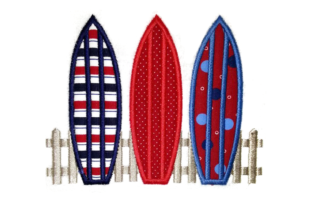
Reviewing 3 Surfboards on Fence Applique for Market Success
As a professional embroidery designer preparing for a weekend craft fair, my first task is evaluating each design for its real-world selling power. Today, I’m looking at the 3 Surfboards on Fence Applique embroidery file. This beach-themed design immediately presents a specific mood: it’s casual, nostalgic, and leans towards a rustic coastal feel rather than a sleek modern one. The image of surfboards resting implies relaxation, a laid-back lifestyle—a strong emotional hook for customers at a handmade market.
Where This Design Stands Out in a Booth Display
At a craft fair, your table is a visual story. I envision a section dedicated to beach and summer themes. Here, 3 Surfboards on Fence Applique would act as a focal point. It’s not overly cute or humorous; it’s decorative and recognizable. On a densely packed table, a customer’s eye will catch it on a large, clean canvas like a tote bag or pillow cover. The three-board composition offers balance and visual weight, making it feel substantial and worth the price.
For booth samples, I would prioritize products that showcase the design’s scale and texture. A sturdy market bag with the design centered makes a statement. A pillow cover instantly suggests a home decor application. Even a simple tea towel with this applique becomes a premium kitchen item. The key is choosing fabrics that complement the rustic vibe: natural linens, crisp cottons, or durable canvas.
Practical Performance on Key Craft Fair Products
Let’s break down how this machine embroidery design performs on specific handmade products.
Tote Bags and Aprons
These are high-volume sellers. The design’s width, given it includes multiple hoop sizes, should adapt well to a bag’s front panel. I would use a larger hoop size to maximize impact. The applique technique can create bold, solid-color surfboards, which is excellent for visual clarity from a distance. On an apron, positioned on the bib or pocket, it becomes a charming, personalized touch. Stitch density on thicker fabrics like bag canvas is crucial; a proper stabilizer is non-negotiable here.
Tea Towels and Pillow Covers
For kitchen towels, the rustic fence element plays perfectly into the farmhouse coastal trend. However, fabric texture matters. On a textured towel, small details might get lost, so testing on scrap fabric is essential. On a smooth pillow cover, the design can shine as a premium decorative element, greatly increasing the product’s perceived value.
Caps and Patches
This is a careful-use scenario. The description mentions multiple hoop sizes, so a smaller size might be intended for caps. Embroidering on a curved cap surface requires skill and the right stabilizer to maintain the design’s integrity. As an embroidered patch, however, 3 Surfboards on Fence Applique could be superb. A finished patch appeals to a different buyer—someone looking for a customizable, giftable handmade item.
Small Pouches and Gift Items
For smaller products like pouches, the design must be scaled appropriately. A small accent version could work beautifully, but one must inspect the design's clarity at reduced sizes. Tiny details or overly dense stitch areas can become muddy. Creating at least one real mockup is the best way to judge this.
Production and Selling Considerations
Turning a digital embroidery file into profitable craft fair products requires a practical mindset.
Batch Production and Online Sales
The design feels repeatable. It’s not overly complex with countless color changes, which aids in batch production for a small shop. For Etsy sellers, this design photographs well. The clear, iconic imagery makes for strong listing photos and printable mockups. The beach category is evergreen, providing good year-round potential, especially for online sales targeting coastal communities or surf enthusiasts.
Customer Attention and Product Value
At the fair, a customer understands this design at a glance. It tells a story. This immediate recognition drives engagement. On a well-made product, the quality of the embroidery—clean applique edges, smooth satin stitches on the fence—communicates handmade quality and justifies a higher price point than a simple printed graphic. It boosts brand consistency for a maker focused on coastal or rustic themes.
Critical Designer Notes Before Production
- Always test on scrap fabric first, especially on the actual materials you’ll use (like textured towels or dark fabric). Thread contrast against the fabric color is paramount.
- Review the design spacing in your software. Ensure elements are not too close for clean hooping.
- The product description notes 9 formats and 4 hoop sizes. Confirm the specific hoop size you need for your chosen product before stitching.
- Inspect stitch density, particularly in the surfboard applique areas and any fence details. High density on thin fabrics can cause puckering.
- Use the correct stabilizer for each fabric type. This is the foundation of a professional finish.
- Create a physical sample. Seeing the design in person, on the product, is the only way to confirm its market-ready appeal.
- Compare how the design looks on light versus dark fabric backgrounds. Some designs lose definition on dark fabrics.
- If you intend this for commercial embroidery, confirm the license terms of the digital embroidery file allows for selling finished products.
Final Judgment for Craft Fair Readiness
The 3 Surfboards on Fence Applique design is a strong contender for a beach-themed product line. Its mood is nostalgic and decorative, suitable for customers seeking a relaxed, coastal aesthetic. It performs best as a focal design on larger items like tote bags and pillow covers, where its composition can be fully appreciated. For smaller items, careful scaling and testing are required.
Its practicality for batch production is good, and its visual appeal is instantly understandable—a key advantage on a busy market day. By following essential embroidery preparation steps, this design can be transformed into high-value handmade products that attract attention, tell a story, and ultimately, sell well from your booth or your Etsy shop.